






Okay, so check this out—I’ve chased blockchain trails for years, and Solana stands out as both a relief and a puzzle. Wow! The network is fast, cheap, and sometimes absurdly inscrutable when you’re trying to trace an NFT drop or follow a token transfer. My instinct said that a good explorer should feel like a trustworthy map, not some cryptic radar display. Initially I thought the basics would be enough, but then realized that the tools you use change everything about how you perceive activity on-chain.
Whoa! When a mint goes live, seconds matter. Really? Yes—seconds. A half-second delay and you miss a snatch on a rare drop. I learned to read transaction timing like a clock. On one hand, explorers give you transparency; on the other, too much noise can make you miss the signal. Actually, wait—let me rephrase that: what you want is clarity, not raw volume of data, because raw volume is just… a heap of logs.
Here’s the thing. A solid Solana explorer helps you spot: wallets splurging on a collection, sudden token burns, or rug-like behavior before it breaks. Hmm… those flash patterns are telltale. My gut said pay attention to program interactions. Then I verified by tracing several suspicious token launches and saw the same fingerprints repeat. Not 100% infallible, but it builds a strong hunch over time.
I’ll be honest — some parts of this process bug me. Explorers vary wildly in UX and depth. Some show the raw bytes and leave you to translate. Others summarize so much that critical nuance disappears. My approach is a mix: start with a friendly dashboard to get context, then drop into transaction-level detail for confirmation.
How I Track NFTs: Quick Rules from the Trenches
First rule: watch the mint authority and the token metadata. Wow! If the metadata URL keeps changing or points to a temporary host, that’s a red flag. Medium rule: track wallet clusters that repeatedly interact with new mints. Larger picture: watch for program-derived addresses and the contracts that orchestrate the sale, because those often reveal middlemen and batch scripts that bots use.
Something felt off about solely trusting marketplace listings. Seriously? Absolutely. Market listings are downstream and can be manipulated or delayed. My instinct said to check the on-chain transfer as the primary source of truth. Initially I thought the marketplaces would always be accurate, but then I saw listings with out-of-sync ownership because of cashing or indexing delays.
Practical tip: use a reliable explorer to look at the “slot” of a transaction and compare it to other events in the same block. That contextual rhythm tells you who acted first. It’s not foolproof, though—block reorgs and retries can create noise. On the east coast or out west, same story: the timing matters and you learn to read it like traffic at rush hour.
Token Tracking: What to Watch For
Token trackers are different beasts. They should show supply changes and holder concentration. Wow! Watch the top ten holders. If a new token’s top 10 wallets hold 95% of supply, you might be looking at a centralized risk. My experience: tokens with healthy distribution and regular small transfers tend to be less volatile and less likely to rug. Hmm… that sounds obvious, but many people miss the nuance.
On one hand, tokens backed by reputable multisigs and timelocks feel safer. On the other hand, token contracts are code and can be changed if the team has upgrade rights. Initially I trusted ownership labels like “team” or “treasury”, but then realized those are just annotations—sometimes user-provided, sometimes inferred. Actually, wait—let me rephrase: always verify the multisig and the actual program permissions on-chain.
Another thing: don’t ignore liquidity flows. Big, frequent withdrawals from a liquidity pool, or a sudden drain into unfamiliar exchanges, are warning signs. My checklist includes: mint behavior, holder distribution, liquidity movement, and program upgradeability. It’s simple but it works. I’m biased, but I prefer explorers that make those four items easy to inspect.
Check this out—if you want a hands-on practice run, follow a small, low-value NFT mint and map every wallet that touches it. You’ll see bots, splittable royalties, and sometimes outright scams. That exercise changed how I think about discovery tools.
Why I Like Solscan for This Work
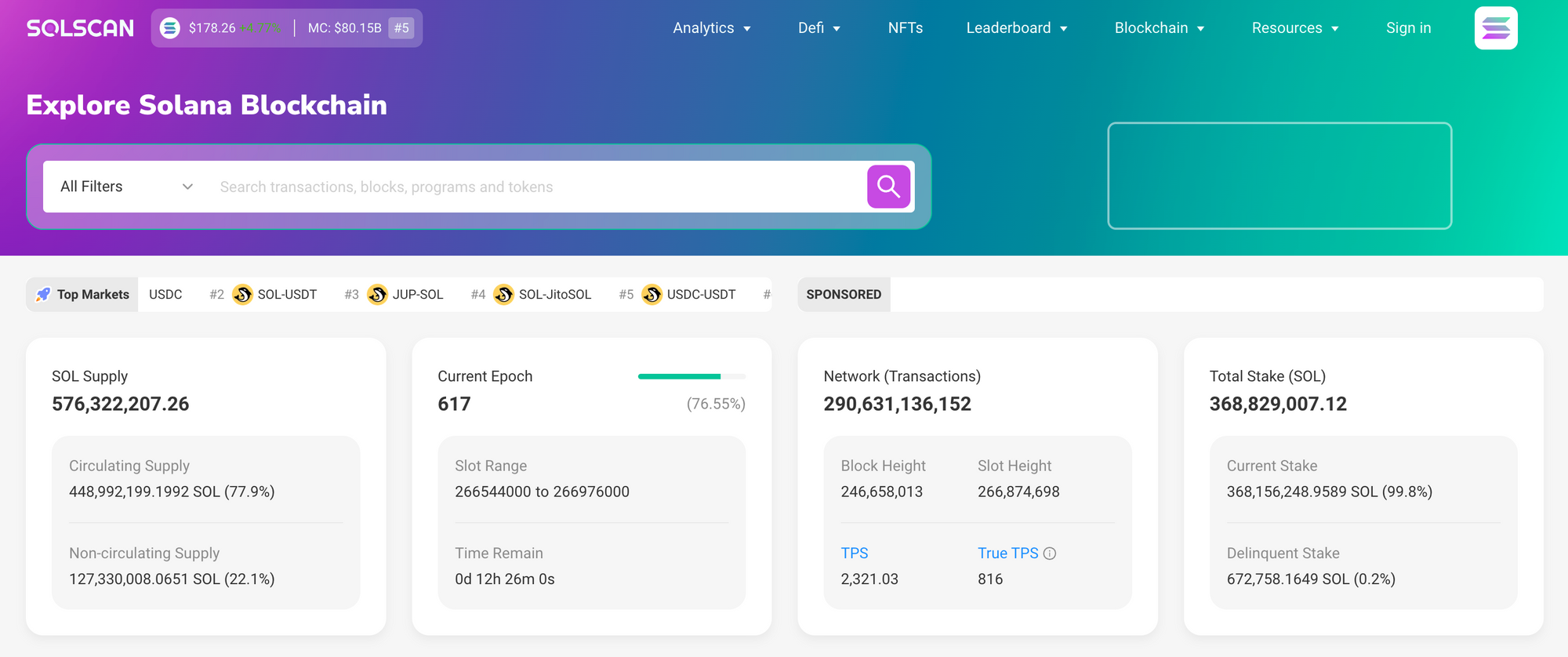
The interface is approachable and deep at once. Wow! It gives a clear transaction timeline and readable token pages, but you can still dive into the raw logs when you need to. My process is: skim the dashboard, confirm with the transaction log, then inspect program logs for weird instruction patterns. This stepwise approach reduces noise and helps me draw better inferences.
If you want to try it, start at the solscan explorer official site and poke around a few contract pages. Seriously? Yes—the link goes to a place where you can see both the simple summaries and the deep details. Be careful with assumptions, though; some labels are community-sourced and some data is cached for performance.
My instinct said to adopt a single reliable tool and learn its quirks. That pays off. On the downside, being too attached to one explorer can bias you when it misses new heuristics that others pick up. So, I usually use two explorers in tandem, switching where each shines. Somethin’ like a hammer and a flashlight in my toolkit.
FAQ — Common Questions I Get Asked
How do I confirm NFT ownership quickly?
Look at the token’s metadata and the most recent transfer event. Wow! Then verify the wallet’s recent activity to ensure it’s not a transient custodian or a marketplace escrow. If the explorer shows programmable transfers, check the instruction logs for mediated transfers or royalty splits.
Can explorers detect rug pulls or scams?
They can give strong signals but not absolute certainty. Hmm… high holder concentration, sudden liquidity removal, and upgradeable program keys are common red flags. Initially I thought a single indicator would be decisive, but in practice you need to assemble multiple signs into a narrative.
What’s a practical workflow for token due diligence?
Start with token supply and top holders, inspect liquidity pools, check program permissions, and then review transaction history for unusual patterns. Honestly, repeat this a few times and patterns become obvious. I’m not 100% sure on everything, but experience helps you prioritize what to check fast.